Globalization Holds Firm
at a Record Level.
Despite geopolitical friction, tariff escalation, and pandemic-era disruptions, global trade volumes have reached an all-time high. The data tells a story of remarkable resilience, and CGN's network sits at the centre of it.

The Narrative of Deglobalization Has Not Matched the Data.
For much of the last decade, commentators have predicted the retreat of global trade. Rising nationalism, supply chain reshoring, pandemic disruptions, and US-China tensions were all cited as the forces that would finally reverse a seventy-year arc of increasing economic integration. The data has consistently refused to cooperate.
Global merchandise trade volumes reached a new all-time high in 2025 with total export values surpassing $32.2 trillion. Services trade, digital commerce, and intellectual property flows are growing even faster. The composition of trade is shifting, the corridors are changing, and new actors are rising, yet the fundamental impulse to trade across borders has never been stronger.
"Trade is not retreating. It is reorganising. The corridors are shifting, the actors are changing, but the volume has never been higher."
CGN Trade Intelligence Unit, April 2026The emergence of new South-South trade corridors, particularly between China, Africa, Latin America, and the Middle East, has added enormous volume to global freight networks. Meanwhile, nearshoring and friendshoring trends in North America and Europe have created new regional supply chain flows that supplement, rather than replace, global ones.
For logistics operators positioned across multiple continents and freight modes, this transformation represents an extraordinary opportunity. The question is not whether globalization continues. The question is who is positioned to serve the new flows it is creating.
The New Architecture of Global Commerce.
Two of the fastest-growing trade corridors in the world, particularly China to Latin America and the Asia-Pacific to Europe and Africa arc, are reshaping global freight flows and creating new demand for multi-modal logistics connectivity.
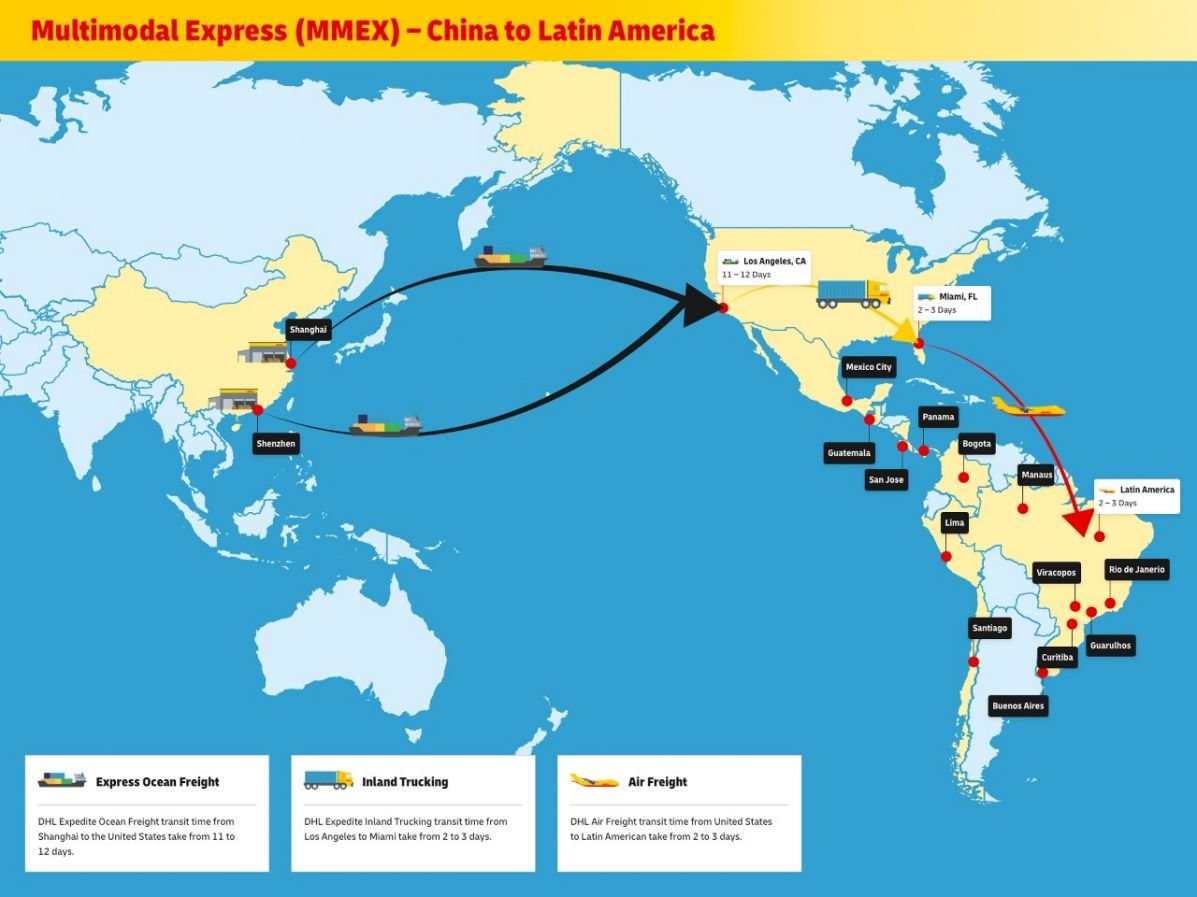 China to Latin America
China-Latin America: The Fastest Growing Corridor
China has become the largest trading partner for Brazil, Chile, Peru, and Argentina. The corridor now handles over $450 billion in annual two-way trade, driven by raw material exports and Chinese manufactured goods flowing in return.
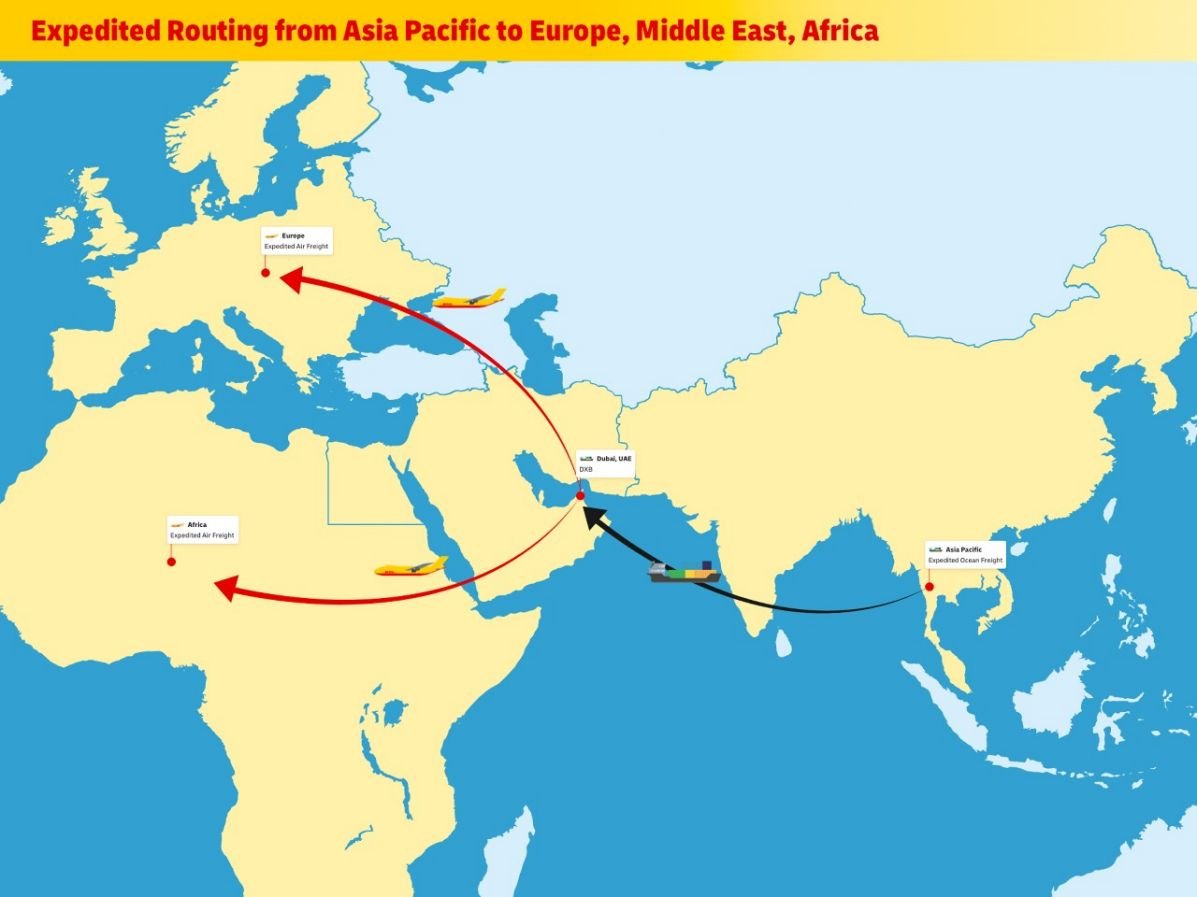 Asia-Pacific to EMEA
Asia-Pacific to Europe, Middle East, and Africa
The Asia-Pacific to EMEA arc, spanning sea, air, and emerging rail routes, handles the world's highest freight volumes. Port congestion, alternative routing, and new infrastructure investments are reshaping how goods move across this corridor.
 Trade Resilience
Resilience Built Into the System Itself.
The post-2020 era tested global supply chains with unprecedented stress. What emerged was not a fragile system collapsing under pressure, but one that adapted, diversified, and ultimately grew. The addition of new trade partners, new routes, and new products has made global commerce more resilient, not less.
 Supply Chain Investment
Record Investment in Global Logistics Infrastructure.
The sustained strength of global trade has triggered a wave of infrastructure investment not seen since the early 2000s. Ports, warehouses, logistics parks, rail networks, and digital platforms are all receiving record capital, with much of it concentrated in emerging market corridors where growth is fastest.
Which Regions Are Growing Fastest.
Global trade growth is far from uniform. While established North Atlantic corridors continue to grow steadily, the highest growth rates are concentrated in Asia-Africa, China-LatAm, and intra-Asian trade. South-South trade now accounts for 67% of all global trade volume, up from 45% in 2010, a structural shift with profound implications for freight networks.
The Middle East has emerged as a pivotal transit and redistribution hub, handling growing volumes between Asia, Africa, and Europe. India's manufacturing expansion is creating significant new westward and eastward freight flows. Southeast Asia is absorbing supply chain diversification away from China faster than any other region.
CGN operates across all five of the fastest-growing trade corridors identified in this analysis, with dedicated route capacity and in-house customs in every major market.
Trade Volume Growth by Region, 2025
"The businesses that will thrive in this environment are those that understand globalization has not ended. It has expanded, diversified, and accelerated. The new trade map is more complex than the old one, but it carries far more opportunity."
What Record Globalization Means for Your Supply Chain.
The sustained strength of global trade creates both opportunity and complexity. Businesses that move now to optimise their cross-border logistics are best positioned to capture the growth in emerging corridors and new trade flows.
Open New Trade Corridors
The fastest growth is happening on South-South corridors. CGN has dedicated capacity and in-house customs on China-Africa, China-LatAm, and India-Africa routes, allowing businesses to access these markets with a single partner.
Explore RoutesProtect Against Disruption
Resilient supply chains use multiple corridors and modes. CGN's multi-modal network across air, ocean, road, and rail gives businesses the routing flexibility to absorb geopolitical and logistics disruptions without stopping shipments.
Build ResilienceStreamline Customs Compliance
As trade volumes grow and new agreements come into force, customs complexity grows with them. CGN's in-house customs brokers across 220+ countries manage declarations, FTA qualification, and duty optimisation on every shipment.
Explore CustomsOpen a Business Account
CGN business account holders get access to volume rates, consolidated invoicing, a named account manager, and priority booking on all routes. As trade volumes grow, having a dedicated logistics partner becomes a genuine competitive advantage.
Open AccountCGN Moves Where Global Trade Moves.
With dedicated freight capacity across the world's fastest-growing trade corridors and in-house operations in 190+ countries, CGN is positioned to help your business capture the opportunity that record globalization is creating.